Fisheries Management & Legislative Report
Contents:
- Booth Canceled at AC Boat Show
- ASA GA Meeting
- Striped Bass
- MAFAC Dissolved
- In Memoriam
- NOAA Terminates Space, Climate and Marine Life Advisory Committees
- Federal DOGE Cuts Under Trump Threaten these NOAA, US Fish & Wildlife Services in NJ
- Letter to Secretary of Commerce from Former MAFAC Members
- ASMFC Preliminary Agenda for Spring Meeting
As newspaper time comes, it makes me reflect. The JCAA lost two friends. We had to cancel the booth at the Atlantic City Boat Show. MAFAC was dissolved. Not a lot of good news.
I can remember going to the Atlantic City Boat Show as long as I have volunteered with JCAA. Some of you know that I am 77 years old and am not as spry as I once was. We could not find enough people to staff the Atlantic City Boat Show. Last year we sold many raffle tickets at this show and this year we sold none. This was a huge, missed opportunity and might have kept JCAA out of the red if we had been there. We have no young people helping. That means no one under 60. In order to reach out to young anglers, we need young anglers at the booth. I have reached the point where I am the old curmudgeon. It is much easier to relate to people of a similar age. I volunteered with Mark to spend the day and take down the AC Boat Show and the Saltwater Expo because there was no one else to do it. Luckily John Toth was at the Saltwater Expo because I was not much help taking down the booth. We all need to thank Mark Taylor and John Toth. Without them there would have been no presence at the Saltwater Expo. John has spent 7 years as JCAA president and Mark is currently in his 10th year as JCAA president. Collectively they have served for more than 1/3 of JCAA’s existence. As Uncle Sam said – “JCAA needs you.”
Mark Taylor and I will be attending the Government Affairs Meeting in May. It is the same time as the ASMFC Spring meeting so others will need to attend virtually. It will be interesting to find out how the manufacturers are dealing with tariffs and other new regulations. ASA and the Fishing and Boating Foundation have been working hard to get a more diverse fishing community and to find new anglers. Some of this is done with federal grants that may disappear. ASA and the manufacturers understand we need to grow the industry by adding more anglers from every community. We need to train those anglers to become the next advocates for the environment. If you look at JCAA, we became advocates for the environment, sustainable fisheries and for the agencies that protect the right to fish recreationally. Without cultivating the next generation, we will have no one to win those battles.
The ASMFC will have their first meeting in May for a preliminary discussion for what should go in the next Striped Bass Addendum. I sat in on the most recent Striped Bass meeting that was only for commissioners. There was no opportunity for input from the public. If I was allowed to speak, I would have mentioned that after 5 hours no one discussed the real problem of what was causing the low recruitment in Chesapeake Bay. How can you rebuild the stocks without considering the causes of low recruitment? There was no discussion on new research, on whether this problem was caused by male fish, the impact of the blue catfish, endocrine disruptors, climate change or any of the other environmental impacts. We know all these factors are contributing to the problem, but we continue to focus on the size of the spawning stock biomass which is composed of almost all females. This spawning stock biomass is larger than any that produced the highest young of the year. They are burying their heads in the sand because they don’t have the research they need to deal with the other problems. They haven’t even talked about what research is necessary. Just continuing to reduce the opportunity to harvest striped bass has not led to good recruitment in Chesapeake Bay. Time for some new ideas. If you read previous JCAA Newspaper articles, you know I was talking about hatcheries, research into these problems and gathering better data. With the current cutbacks in NOAA staff and funding for research, there is no way we will be able to count on the Federal Government for these projects. The states will not have the money since they will be experiencing similar funding cutbacks from the Federal Government. These are scary times.
I have been working on environmental justice and climate change for many years. When I saw what was happening at the Federal Government level with firings of personnel my concerns multiplied. When I learned of the beginning cutbacks at NOAA, I realized we were losing people just hired to do the marine recreational data gathering and to provide better analysis of that data. Then I learned that any initiative that dealt with environmental justice, climate change or diversity would be cancelled.
As you know, I have served on the Marine Fishery Advisory Committee to the Secretary of Commerce for almost 6 years. I would have ended my term in April. I didn’t make my termination date. MAFAC, which was established by President Nixon’s Secretary of Commerce in 1971, was dealing with climate resiliency, climate change, environmental justice issues and diversity. I have served on those committees. I was not surprised when I got an email from the Secretary of Commerce stating that we had fulfilled our mission (since 1971) and would no longer be in existence. The first thing I considered was that I must have done a great job that MAFAC had solved all of NOAA’s problems with the managing of marine fisheries. It is amazing that NOAA no longer needs all the unpaid volunteers who put in their time to find solutions to our NOAA and NMFS ongoing problems. That thought lasted 2 seconds when I realized that NOAA and NMFS are losing all this expertise and diversity of the committee.
I am not going to list the current members, but I have a list of the members from 2016 to the present. If you are interested in seeing the vast expertise and experience of these volunteers, just let me know. This was like serving on a think tank with many brilliant people in their fields. I am always amazed by how I broaden my knowledge on issues and what I have learn from my fellow committee members and NOAA and NMFS staffs. With all our diverse backgrounds, we found ways to work together and build consensus. We put out some valuable white papers, reports and surveys. Whatever your political leanings, we were all able to work together for the common good. I don’t know when this great loss will be corrected. I feel sorry for the people where just been appointed to MAFAC eager to contribute. Just to get on MAFAC takes a lot of time and energy.
Below are two remembrances for men who contributed to the environment, fisheries and recreational participation for many years. I worked with both of these men since the late 80’s. They became good friends and gained my respect. I hope we can find others to step into their roles and bring the same energy. I know I will miss them both.
Assemblyman John Ronney passes at 85
Assemblyman John Ronney was the longest serving assemblyman when he retired after serving more than 27 years. He was a strong supporter of the environment and worked hard for those important issues all those years he was in the assembly.
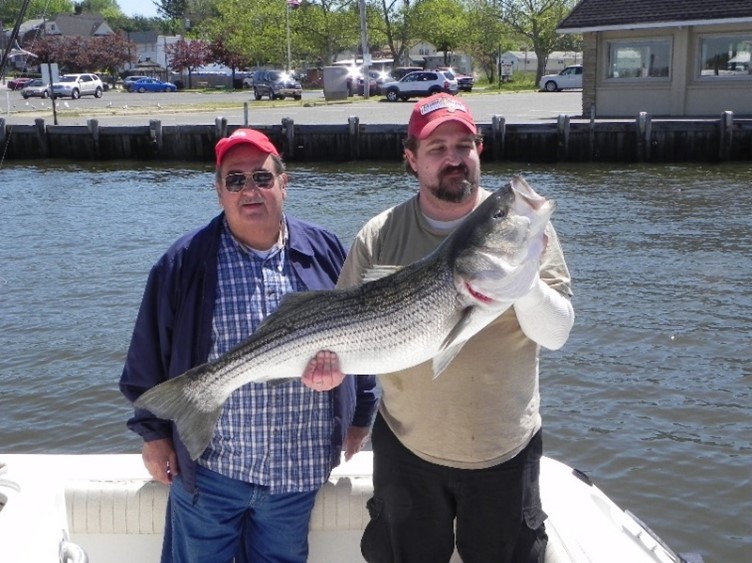 John Ronney and his son Patrick are holding one of the fish they caught on our fishing trip.
We met for the first time at an Assembly Committee hearing on striped bass regulations in the mid-eighties. I learned he was a diehard striped bass fisherman like me, and we became good friends despite the fact I was a democrat and he a republican. We worked together on issues important to NJ fisheries including land use issues. Being an angler he had a better understanding of the issues. We did many charter trips together over the years and during those trips we would discuss those issues and try to find solutions.
He fished until he could not go on boats anymore. He was a great angler, and I have pictures to prove it of him as he is holding big striped bass. We called each other so he would get updates on my fishing trips. I would ask about his wife and kids, who he loved dearly. I will really miss the calls from my long-time friend.
John was and Air Force Veteran who served in Germany during the Berlin crisis.
Frank Dara passed March 19 at 79
By Frank Virgilio
Frank was truly a man of dedication to his beloved NJ State Federation of Sportsman Clubs and the Governor’s Surf Fishing Tournament.
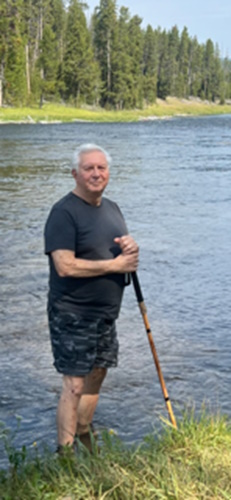
He was a man whose shoes would be hard to fill; he was active in leadership and has served in numerous roles, including Past president of the Federation, Chairman of the Governor's Surf Fishing Tournament, President of the Northern Region of the NJ State Federation of Sportsmen's Clubs (NJSFSC), and Chairman of the Federation Board of Directors. He worked tirelessly at the club, county, regional, and state levels; he made a significant and lasting mark on our Federation. Frank was also a founding member of the New Jersey Sportsmen's Wildlife Foundation, a charitable IRS 501© (3) organization. This particular foundation has repeatedly provided grant money to his beloved Federation.
Behind every effort, Frank's personal goal of "Protecting Our Heritage" (a phrase he personally coined and incorporated into our logo) was at the heart of his effort. We must recognize Frank's outstanding service and his incredible legacy.
Experts caution the groups play a key role in ensuring agencies use the best available science in their decision making.
The Trump administration is disbanding expert advisory committees focused on space, climate, coastal area management and marine fisheries after the agency they were designed to assist said they are no longer necessary.
The National Oceanic and Atmospheric Administration is ending the committees because they “have served their purpose and should be terminated,” Nancy Hann, the agency’s deputy undersecretary for operations, said in a memorandum obtained by Government Executive. The terminations follow an executive order from President Trump requiring agencies to do away with any federal advisory committees not required by law. The impacted committees are the:
- Advisory Committee on Excellence in Space
- Climate Services Advisory Committee
- Marine and Coastal Area-based Management Advisory Committee
- Marine Fisheries Advisory Committee
The Commerce Department’s Office of Privacy and Open Government, which manages all of the federal advisory committees within Commerce, will work with the committees to ensure “an orderly termination,” Hann added.
The space committee, established in 2002, assisted NOAA in assessing the capacity and actions of the commercial sector in space and advises it on avoiding negative impacts on space debris. The climate committee, stood up just before President Biden left office, was established to provide NOAA with advice on making its data and tools better available for those managing droughts, floods, wildfires, heatwaves and other impacts of climate change.
The coastal management committee, also created under Biden, provided expertise on conservation and restoration in coastal and marine areas, including the Great Lakes. The fisheries committee was established in 1971 to provide advice on policies related to living marine resources, including fish, marine mammals, sea turtles, and seabirds and other waterfowl.
Ahead of the terminations, employees involved with the committees were instructed by the Commerce Department to pause any meetings until further notice. A NOAA spokesperson said the termination decisions were made by Commerce and any questions must be directed to the department. Commerce did not respond to a request for comments.
Such councils exist throughout and are governed by the 1972 Federal Advisory Committee Act. They are set up across agencies to gather advice and information from non-federal experts, including those in academia and the private sector. The General Services Administration provides oversight of the groups to ensure they remain objective and accessible to the public. There are at least 1,000 federal advisory committees throughout government, according to GSA.
Committees not mandated by Congress go through an administrative review of their activities and responsibilities every two years.
"Jules Barbati Dajches, an analyst with the Union of Concerned Scientists, said last month that FACs help ensure that ""decisions that necessitate the use of science are free from political interference, corruption, and unintentional errors.”"
“Consisting of experts in their respective fields from academia, local governments, non-profits, and industry, they provide guidance to policymakers on a range of high-stake issues that impact people every day–including their access to clean air and water,” Barbati Dajches said. “Advisory committees, groups, and boards bring the public into the work of the government to provide advice in a deeply engaged way.”
Barbati Dajches added the committees help agencies identify and utilize the best available science and “provide a reality check to create effective policies.”
The Environmental Protection Agency previously fired members of its two science advisory committees and Trump has also signed an order requiring at least one-third of FACs to be dissolved.
Link to original article.
The future of three facilities operated by the National Oceanic and Atmospheric Administration and one U.S. Fish Wildlife ecological field office in New Jersey are in question, after being caught up in the cuts to the federal budget initiated by the Trump administration's Department of Government Efficiency, or DOGE.
It's not clear if the services will be lost, moved to other locations within the state or continue as business as usual. Two of the NOAA facilities are leased office space in Wall and in the Atlantic County town of Northfield that are used by its law enforcement officers.
Both of the office leases are to be ended, according to the list of DOGE's real estate lease terminations found on its official website. A NOAA spokesperson declined to comment on the future of these operations.
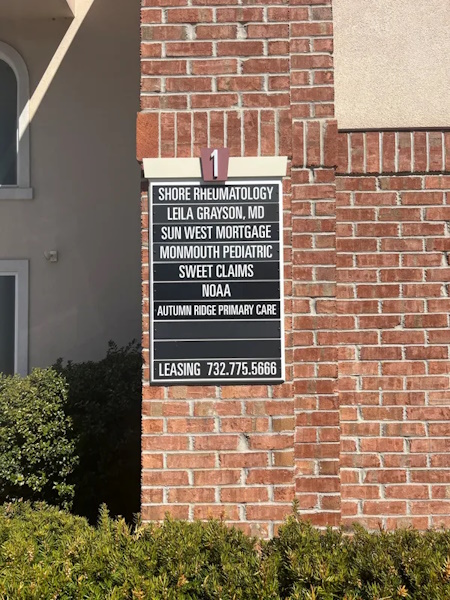 The directory outside a Wall office building on Route 138 lists the National Oceanic and Atmospheric Administration, or NOAA, as a tenant as of March 21, 2025. (Dan Radel/Asbury Park Press)
The third NOAA facility, the James J. Howard Marine Science lab at Sandy Hook, is not scheduled to have its lease terminated but faces a potential cut in funding that could impact its services, U.S. Rep. Frank Pallone, D-N.J., told the Asbury Park Press last month.
Pallone, the ranking member of the House Energy and Commerce Committee, said $5 million in Inflation Reduction Act funding for the lab allocated by Congress is unavailable, which is putting jobs, research and critical infrastructure at the lab at risk. The lab’s seawater intake supply infrastructure, essential for the lab’s core function, was set to be rehabilitated using IRA funds.
Pallone said the freeze means the system is in jeopardy of total failure by April, when contracts for critical maintenance staff expire.
The possible cuts to the lab have students at Marine Academy of Science & Technology or M.A.S.T. at Sandy Hook concerned for the future of their education.
The Sandy Hook Lab is a big part of the program. We use it for our junior year Research I class to perform some simple and some complex experiments, but the seniors use the lab to execute their capstone project. Their projects span the entire year, and are extremely impressive, said Cassara Yannarelli, a junior from Atlantic Highlands.
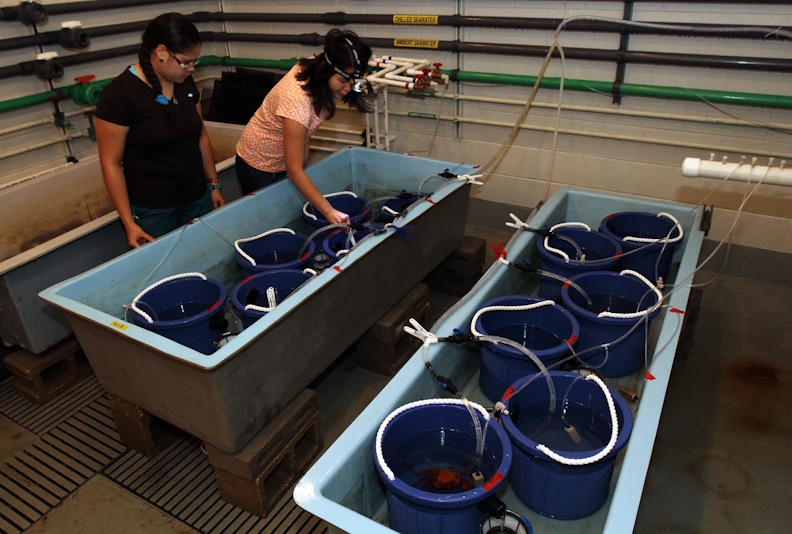 Two students study female crabs at NOAA's James J. Howard Marine Sciences Laboratory in the Gateway National Recreation Area at Sandy Hook in this 2014 file photo. (Tanya Breen/Asbury Park Press)
Yannarelli has a summer internship at the lab that could be impacted if the staff is cut that would oversee it.
The final building is the U.S. Fish & Wildlife Service ecological services office on Jimmie Leeds Road in Galloway Township, also in Atlantic County, which according to the General Services Administration (GSA) will have its lease terminated on Nov. 28.
This office works with experts, conservation groups and landowners to protect and recover threatened and endangered species. It coordinates with federal and state agencies, local governments, business and private citizens to make sure that wildlife resources are considered during project planning.
New Jersey Field Office biologists serve on oil spill response teams, investigate the effects of environmental contamination and work to restore polluted habitats. It also collaborates with private landowners to restore fish and wildlife habitats.
Paul Hughes, a spokesperson for the GSA, which handles real estate, acquisition, and technology services for the federal government said they're reviewing all options to optimize the federal footprint and building utilization.
We are actively managing lease contracts by leveraging existing contract cancellation rights. As leases enter their soft term, we are sending letters of intent to customer agencies to inform them GSA is considering lease termination, thereby exercising GSA’s contractual rights as agreed upon with our lessors, Hughes said.
Hughes said actively managing their leases gives GSA the opportunity to work with its partner agencies on their evolving and longer-term needs and will often allows the GSA to enhance space utilization and secure better terms for the government — including better pricing.
"In instances where the current space remains the most suitable option — whether temporarily or longer term — he said they are adjusting their approach. For these agencies, he said they're either rescinding termination notices or, in some cases, not issuing them at all. ""These contractual cancellation rights are in accordance with regular and well-accepted private industry contracting processes. GSA’s letters of intent to terminate have no immediate effect and do not mean the lease has been terminated,"" Hughes said."
While not directly addressing the future of the Galloway field office, Laury Marshall, the acting chief of public affairs for the Fish & Wildlife Service, said they remain steadfast in their commitment to serving communities, tribes and conservation partners while upholding federal responsibilities with efficiency and accountability.
Under President Donald Trump, she said the federal government is prioritizing strategic reforms to maximize resources, cut waste and enhance operational effectiveness across our facilities.
We are actively working with GSA to ensure that every facility and asset is utilized effectively and where necessary, identifying alternative solutions that strengthen our mission. These efforts reflect our broader commitment to streamlining government operations while ensuring that conservation efforts remain strong, effective and impactful, Marshall said.
When Jersey Shore native Dan Radel is not reporting the news, you can find him in a college classroom where he is a history professor. Reach him at dradel@gannettnj.com.
Link to original article.
Fisheries and aquaculture are an economic engine in the United States. Fisheries generated $321 billion in sales impacts and nearly $150 billion in value-added impacts (NOAA FEUS 20221) and aquaculture is a $1.5 billion industry (NOAA FOTUS 20202). The future success of U.S. seafood in the global marketplace depends on continuing to lead the world in harvesting sustainable products from healthy oceans and waterways. Hard working Americans are the backbone to this multibillion-dollar seafood industry that NOAA Fisheries supports, and the Marine Fisheries Advisory Committee (MAFAC) is the group of nongovernment citizens supporting NOAA Fisheries in implementing their mission.
MAFAC, established in 1971, predates the modern fisheries management system and exists to provide commercial, recreational, aquaculture, seafood, consumer, tribal, academic, and other interest groups a consistent pathway for input and feedback on NOAA Fisheries policies and programs. The Committee has served under ten consecutive Presidential Administrations on both sides of the political aisle and is available to the Secretary of Commerce and NOAA on an ongoing basis as an industry expert source for consultation during the development of ocean resource policy and agency programs, such as the National Seafood Strategy and the development of NOAA’s aquaculture program. The below signed recent and former MAFAC members submit this letter to you in continuation of our shared interest in advising the Department on the management of living marine resources and support for the marine economy.
Sustainable commercial and recreational fishing industries cannot persist into the future without direct support and investment from NOAA. Fisheries and marine resource management is focused on managing a public resource for long-term benefit to the nation. NOAA and NOAA Fisheries have been developed to provide critical science and services to the communities and industries that depend on these natural resources for their jobs, recreation, and future. NOAA Fisheries collects and provides the data, science, and research that is foundational to U.S. fishing, and supports a uniquely collaborative system that empowers fishermen, state managers, and others to contribute to fisheries management so that decisions are tailored to the needs of fisheries in each region. A disruption to the regular and timely provisioning of these science and service products, whether it be through loss of critical staff and capacity, closing programs and offices, inconsistent science and surveys, or other such cuts will result in direct and lasting harm to seafood businesses, coastal communities, and the American people.
Fishing is a deeply local industry, which makes it essential for NOAA Fisheries to have a presence in coastal communities across the country to understand the regional needs. At the same time, fisheries are influenced by national and international factors that require cross-coordination. These factors combine to mean that NOAA needs the staffing, capacity, and geographic flexibility sufficient to support fishing at all of these scales. The expertise of NOAA’s scientists, managers, liaisons, communicators and more helps ensure that NOAA’s science and decisions meet the needs of the seafood industry and marine resource-dependent communities around the nation. Because of NOAA Fisheries, the United States has a globally competitive seafood industry that leads the way in standards and quality.
MAFAC’s purpose in this system is to be a consistent forum where fishermen, seafood processors, conservationists, aquaculture experts, and scientists can work together to support NOAA Fisheries in solving tough problems facing marine resource management. Above all, the below signed current and former MAFAC members want to deliver the resounding messages we have heard. American seafood companies and fishing communities need NOAA to be a champion for sustainable U.S. seafood and to fight harder for those businesses, products, and people. The seafood industry and the American people deserve to have viable fisheries that can support fishing dependent communities across the nation. Without opportunities for input and guidance from groups like MAFAC, and without robust funding and staffing at NOAA, that is not an achievable future.
May 5-8, 2024
The agenda is subject to change. Bulleted items represent the anticipated major issues to be discussed or acted upon at the meeting. The final agenda will include additional items and may revise the bulleted items provided below. The agenda reflects the current estimate of time required for scheduled Board meetings. The Commission may adjust this agenda in accordance with the actual duration of Board meetings. Interested parties should anticipate Boards starting earlier or later than indicated herein.
- Progress Update on Benchmark Stock Assessment for American Lobster
- Consider Final approval of Draft Addendum XXXII to Repeal Addendum XVII Minimum and Gauge Size Requirements
- Report from Maine, New Hampshire, and Massachusetts on Industry Meetings
- Review Report of Lobster Conservation Management Team Area 3
- Update on Joint New England and Mid-Atlantic Fishery Management Council Alternative Gear Marking Amendment
- Discuss Vessel Tracking Rules
- Consider 2025 Stock Assessment Update and Possible Management Response
- Elect Vice-Chair
- Review and Consider Conservation Equivalency: Policy and Technical Guidance Document
- Progress Update on Ongoing Stock Assessments
- Reconvene on May 8
- Consider Red Drum Technical Committee Report on Stock Assessment Follow-Up Tasks and Possible Management Response
- Progress Update on Atlantic Croaker Benchmark Stock Assessment
- Consider Terms of Reference for 2027 Benchmark Stock Assessment
- Consider Massachusetts Conservation Equivalency Proposal for Commercial Fishery Size Limit
- Consider Approval for Public Comment Draft Addendum III on Proposed Management Measures for 2026
- Review and Discuss Enforcement of Commission Species
- Review and Discuss Ongoing Enforcement Activities (Closed Session)
- Review and Consider Approval of FY26 Budget
- Review White Paper on Board Voting and Virtual Meeting Standard Operating Practices and Procedures
- Future Annual Meetings
- Conduct Executive Director Performance Review (Closed Session)
- State Agency Reports
- Consider Approval of 2026 Request for Proposals
- Program and Committee Updates
- Consider Final Report from Work Group on Precautionary Management in Chesapeake Bay
- Progress Update on 2025 Ecological Reference Point Benchmark Assessment
- Provide Direction to Technical Committee on 2026-2028 Stock Projections
- Review Technical Committee Report on New York Study of Alternative Commercial Tags
- Progress Update on 2025 Tautog Stock Assessment Update
- Elect Vice-Chair
- Consider Final Approval of Draft Addendum IX on Multiyear Specifications for Male Only Harvest
- Review Adaptive Resource Management Subcommittee Recommendations Regarding Input on Changes to Reward/Utility Functions
- Review and Populate Advisory Panel Membership
- Executive Committee Report
- Review White Paper on Board Voting and Virtual Meeting Standard Operating Practices and Procedures
- Committee Reports
- Review Noncompliance Findings, if necessary
- Consider Noncompliance Recommendations, if necessary